Storage is part of the purchase
In a small apartment, a cleaner needs more than a place to sit in its box. You need a way to reach it, carry it to a mess, empty it, dry the removable parts and return it to storage. An appliance that is buried behind luggage may be less useful than a slightly larger one you can retrieve easily.
Start with the storage location you actually have. This guide is a planning method rather than a claim that a particular cleaner fits every cupboard.
Measure with the hose and cord included
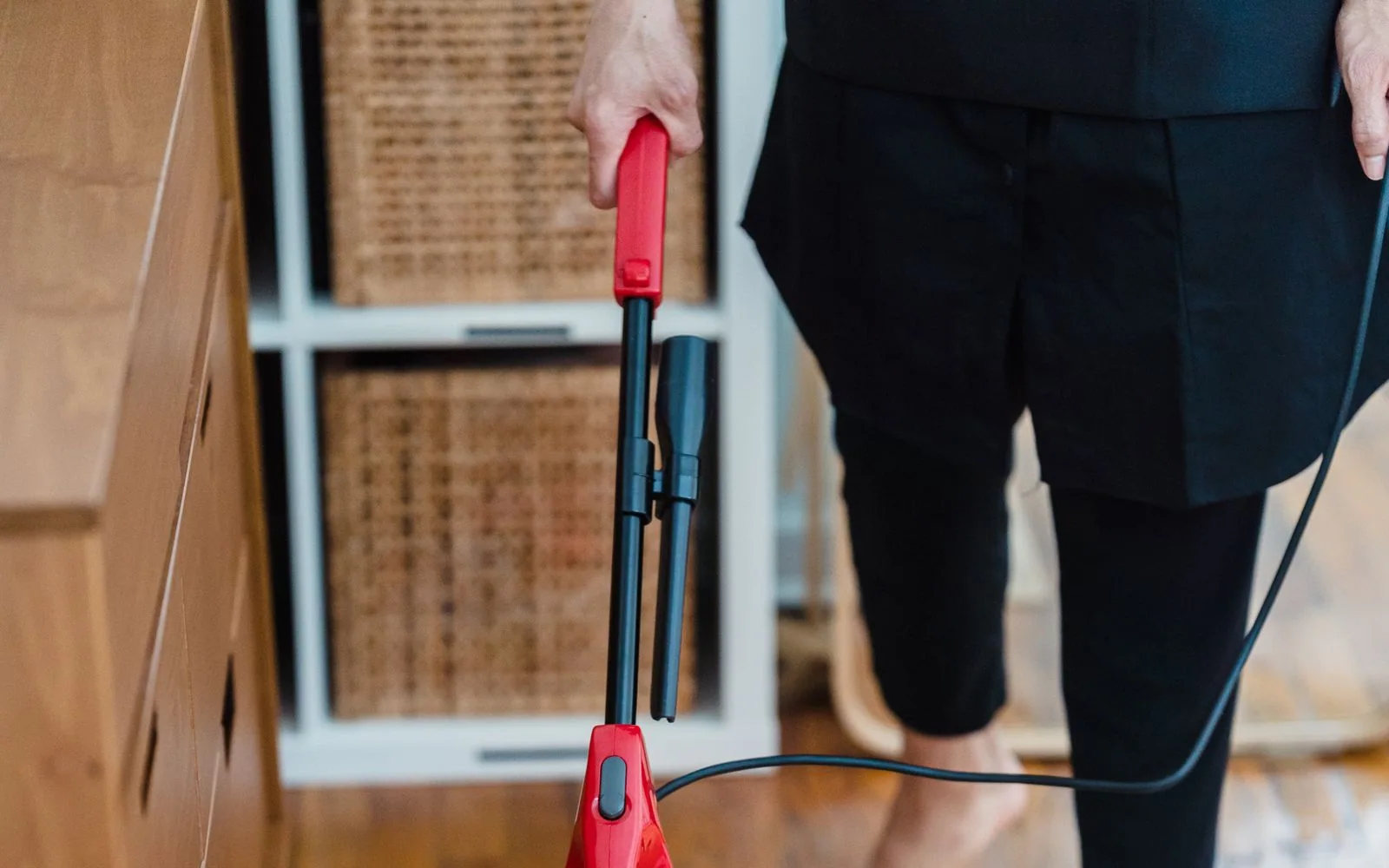
Record the space’s width, depth and height, including the door opening. Compare those measurements with the machine as it is stored, not just the main body. Check how the hose, tools and cord are secured. A loose accessory may require another shelf or box.
The Little Green Mini is one example of a product explicitly marketed around portable spot cleaning. Its name alone does not establish a fit. Read dimensions and instructions for the exact model, and allow enough access to remove it without pulling on a hose or cord.
Enter those measurements in the storage-fit checker.
Plan a clean-to-dirty route
Find the place where you will fill the clean tank and the place where the manufacturer permits you to empty dirty water. Consider the distance between them and the area you are likely to clean. Keep the electrical setup and household walkways practical.
Decide where rinsed removable parts can dry without contaminating food-preparation space or being knocked onto the floor. That area may be temporary, but it should be thought through. A machine stored damp to save space can turn tomorrow’s cleanup into a less pleasant job.
Related guide: Portable or upright carpet cleaner: which fits a pet household?
Choose access over theoretical capacity
A large tank can sound attractive, but ask whether it helps your typical task. For occasional localized messes, easy retrieval and manageable carrying may matter more to you than fewer refills. For repeated larger jobs, frequent tank trips may become frustrating.
If you rent, consider the permitted cleaning methods for carpets and furnishings. Check the lease or ask the relevant owner where needed. Do not assume a machine purchase changes your responsibility for material care, especially for furniture that does not belong to you.
Make a complete storage kit
Keep the machine, approved formula and instructions organized so you can identify them quickly. Store chemicals according to their labels and securely away from pets and children. Leave parts dry before packing them as the manual directs.
A small note attached inside the cupboard can list the model, where the manual is saved and the basic reset steps. The goal is a tool that is ready to use without turning the whole apartment into a temporary equipment store. Choose a complete routine you have room for, not just the smallest-looking product photo.
Store parts only once they are dry. See how to clean a spot cleaner after use.
Try a cupboard rehearsal
Use a box or paper footprint to represent the cleaner and a separate container for tools. Put them in the proposed cupboard, then retrieve them while the hallway is in its normal state. Check whether you must first move laundry, shoes or another appliance. Repeat the route to the filling and cleanup area.
If the setup only works when the apartment is unusually tidy, reconsider it. Move seldom-used objects before committing daily access to a heavy or awkward arrangement. Leave space for drying outside the cupboard rather than assuming wet components can be packed immediately. The rehearsal costs nothing and gives you a clearer answer than a manufacturer’s phrase such as “compact storage.” Your actual shelf opening and retrieval route are the relevant measurements.
Sources & further reading
Manufacturer information and reference material consulted for this guide. Model specifications and care instructions can change; check your exact model’s manual.